
7 Parking Lot Accessibility Issues That Could Put Your Business Out of Compliance
Maintaining a commercial property requires constant attention to detail, especially when it comes to the pavement under your clients' tires. While many business owners focus on the interior of their facility, the exterior grounds create the first impression and carry significant legal responsibilities. Ensuring that your parking facilities remain fully compliant with federal, state, and local accessibility guidelines is essential for protecting your enterprise from costly lawsuits, severe fines, and administrative penalties. Routine parking lot maintenance serves as your primary defense against legal liabilities while ensuring that every visitor, customer, and employee can access your facility safely and comfortably. Understanding the specific hazards that trigger non-compliance allows you to take proactive steps toward remediation before minor wear turns into a massive legal issue.
1. Missing or Inadequate Accessible Parking Spaces
One of the most common ways commercial properties fall out of compliance is by failing to provide the required number of accessible parking stalls. Accessibility guidelines mandate a minimum ratio of designated accessible stalls based on the total capacity of your lot. According to AsphaltPro Magazine, every parking lot, regardless of how small, must feature at least one ADA-accessible stall for every 25 spaces available. As total capacity increases, the required number of accessible spaces rises proportionately, including specific requirements for van-accessible stalls that accommodate larger vehicles with wheelchair lifts.
When you ignore these strict ratio requirements during layout changes or resurfacing projects, your business becomes an immediate target for compliance audits and legal action. Proactive parking lot maintenance ensures that your parking layout is accurately planned, clearly designated, and strictly aligned with current spatial regulations. Proper layout planning guarantees that your property provides equal access to all visitors right from the moment they pull onto your asphalt.
2. Severely Faded or Absent Pavement Markings
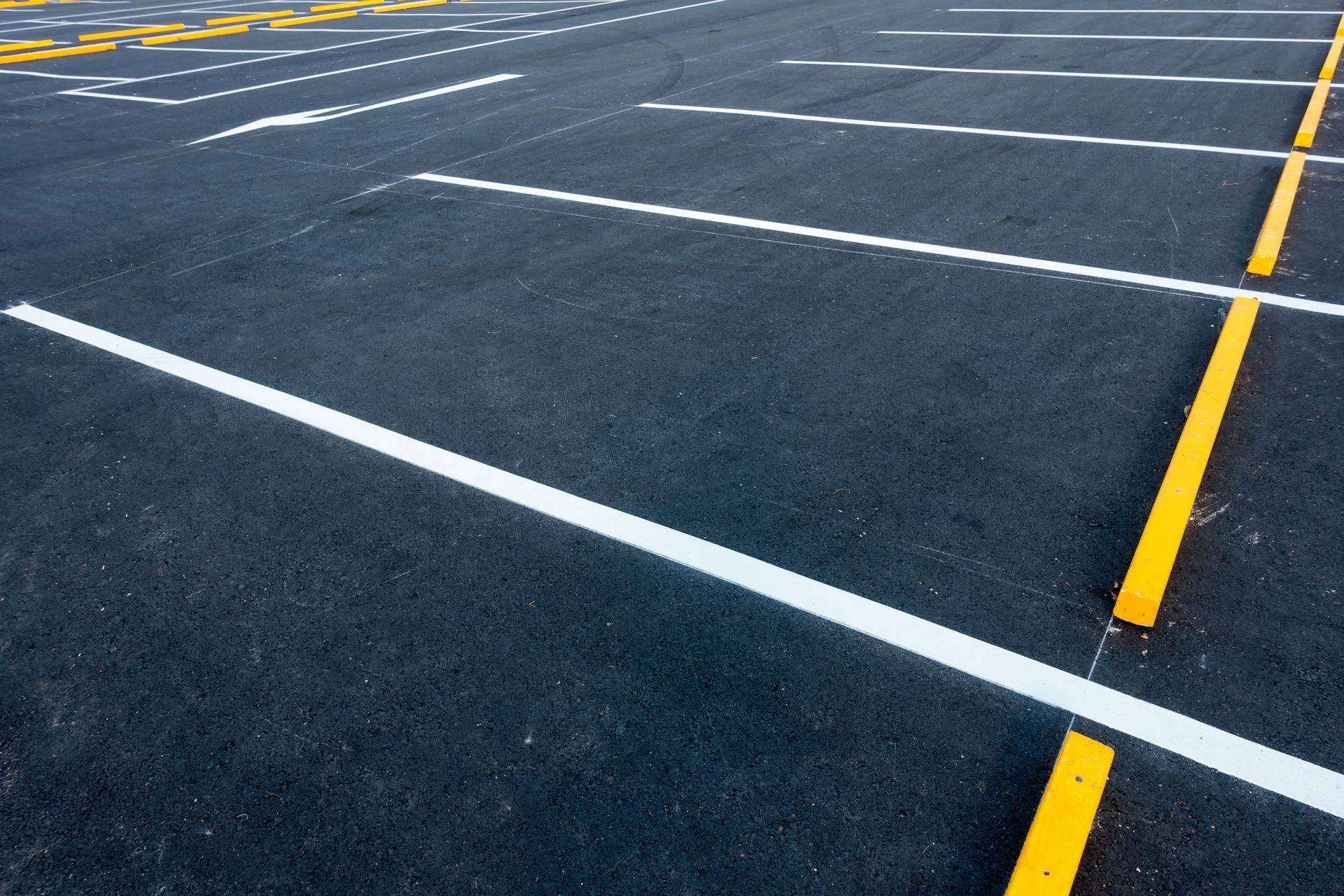
Even if you've set aside the correct number of accessible stalls, faded paint can render them completely non-compliant in the eyes of the law. Over time, heavy vehicular traffic, harsh weather conditions, and UV exposure wear down pavement paint, obscuring essential blue stall outlines, international symbols of accessibility, and crosshatched access aisles. If a driver can't clearly identify an accessible space or its adjacent unloading zone due to degraded paint, your business is failing to meet basic accessibility standards.
Scheduling regular parking lot maintenance to restripe your asphalt keeps all regulatory markings vibrant, sharp, and instantly recognizable to drivers. Clear, high-contrast striping prevents non-disabled drivers from unintentionally parking in restricted zones or blocking the critical loading corridors needed by visitors with mobility devices. Professional restriping preserves the functional integrity of your accessible design and demonstrates your visible commitment to welcoming every customer.
3. Deteriorated Surfaces and Severe Potholes
A surface filled with cracks, deep potholes, and uneven asphalt creates severe physical hazards for individuals using wheelchairs, walkers, or canes. Federal accessibility standards require that accessible routes, parking stalls, and loading zones remain virtually smooth, stable, and slip-resistant. When asphalt breaks down due to water infiltration or freeze-thaw cycles, the resulting structural damage makes navigation dangerous and painful for mobility-impaired visitors.
Consistent parking lot maintenance eliminates surface hazards through timely crack filling, pothole patching, and structural repairs before small defects expand into major compliance violations. Keeping your pavement smooth and uniform reduces trip risks for all pedestrian traffic while preventing costly personal injury claims on your commercial grounds. Smooth pavement guarantees that individuals utilizing assistive mobility devices can travel seamlessly from their vehicles to your front entrance without facing dangerous obstacles.
4. Excessive Slopes and Improper Surface Drainage
Accessibility regulations establish strict limits on allowable slopes within designated parking stalls and their corresponding access aisles. Surface slopes in these specific areas generally can't exceed a ratio of 1:48 (roughly two percent) in any direction, ensuring that wheelchairs don't roll away and ramp lifts can operate safely. Over time, heavy vehicle weight, subgrade settlement, and poor water runoff patterns can warp the pavement, creating illegal slopes and pooling water that violates flat-surface requirements.
Incorporating asphalt leveling and corrective drainage solutions into your long-term parking lot maintenance strategy prevents structural sagging and standing water accumulation. Addressing drainage flaws stops standing water from turning into slippery algae in summer or hazardous black ice in winter, both of which severely compromise accessible routes. Controlling surface grades through expert pavement care preserves compliant slopes across every foot of your accessible parking zones.
5. Missing or Improperly Positioned Upright Signs
Pavement markings alone are rarely sufficient to satisfy accessibility laws; federal standards mandate high-visibility mounted signs for every designated stall. These signs must feature the International Symbol of Accessibility and be mounted at a specific height—typically at least 60 inches from the ground to the bottom of the sign—so they remain visible even when a vehicle is parked in the space. Missing signs, bent posts, or signs obscured by overgrown trees instantly put your lot out of compliance.
Including hardware inspections as part of your routine parking lot maintenance plan ensures that all vertical signage remains securely anchored, properly elevated, and completely unobscured year-round. Promptly replacing damaged posts or faded signboards protects your business from citations during municipal inspections or private compliance audits. Clear vertical signage helps drivers identify accessible options from a distance, reducing traffic confusion and keeping loading zones clear.
6. Obstructed or Non-Compliant Access Aisles
Access aisles are the crosshatched areas adjacent to accessible parking spaces that allow individuals to deploy wheelchair ramps and maneuver safely outside their vehicles. These aisles must connect directly to an accessible route leading to your facility's main entrance without forcing pedestrians to travel behind parked cars. Common violations occur when property owners permit delivery drivers, dumpsters, or outdoor display racks to encroach upon these critical, crosshatched clearance zones.
Property managers must strictly enforce keep-clear policies while prioritizing pavement care that keeps crosshatching bright, visible, and clearly delineated. Preventing physical encroachments and maintaining clear perimeter pathways guarantees that individuals with physical disabilities have an unobstructed path from their car door to your building entrance. Educating staff and vendors to treat these aisles as non-negotiable clear zones ensures continuous, real-world accessibility for every visitor.
7. Non-Compliant Curb Ramps and Transition Zones
The junction where your asphalt parking lot meets the concrete sidewalk or entrance ramp is a frequent site for accessibility non-compliance. Transition zones must offer a smooth, flush connection with gentle slope transitions and detectable warning surfaces, such as truncated domes, to alert visually impaired pedestrians. Over time, ground settling and asphalt heave can create dangerous vertical lips or steep drops at curb ramps, making them impassable for wheelchair users.
Addressing transition defects during routine structural upkeep eliminates abrupt vertical offsets and repairs crumbling curb edges along your main pedestrian pathways. Timely pavement repairs ensure that curb ramps maintain their structural integrity, proper slope angles, and slip-resistant textures through all seasonal weather changes. Seamless transitions allow all visitors to move confidently between vehicular zones and pedestrian walkways without encountering physical barriers.
Maintaining an accessible, compliant, and welcoming commercial facility requires ongoing vigilance, continuous monitoring, and professional repair services designed to protect your investment. By addressing faded striping, uneven asphalt surfaces, non-compliant slopes, and sign defects early, you safeguard your business against expensive legal liabilities while improving overall safety for every customer who visits your property. Investing in professional pavement upgrades ensures your grounds meet every regulatory standard while enhancing the curb appeal and value of your commercial facility. Contact Cunningham Paving Co today to schedule a comprehensive evaluation of your commercial pavement and keep your property fully accessible and compliant year-round.




Share On: